A bed by the fire
People without a home now sleep round the campfire under a patched blanket, storage upgrades fit inside the building, and the well got small.
At the camp in Ashford there is one family without a tent: Gordon and Eleanor Heath and their two children, Miriam and William. Until now that meant something sad and a little silly: at night a family without a home just stood where it was until morning, and never got any rest back. You would find them in the grass at dawn, as tired as when they went to bed, if you can call it that.
Now they go to the fire. At 23:00 the rest of the camp goes into its tents, and the Heaths walk over to the campfire and lie down round it, each in a spot of their own, on their side, facing the flames. Each of them gets a patched wool blanket and a rolled-up coat under the head. A night by the fire gives half the rest of a bed, which is enough to get through the next day, and not enough to want to live like that. When the night is over they get up again.
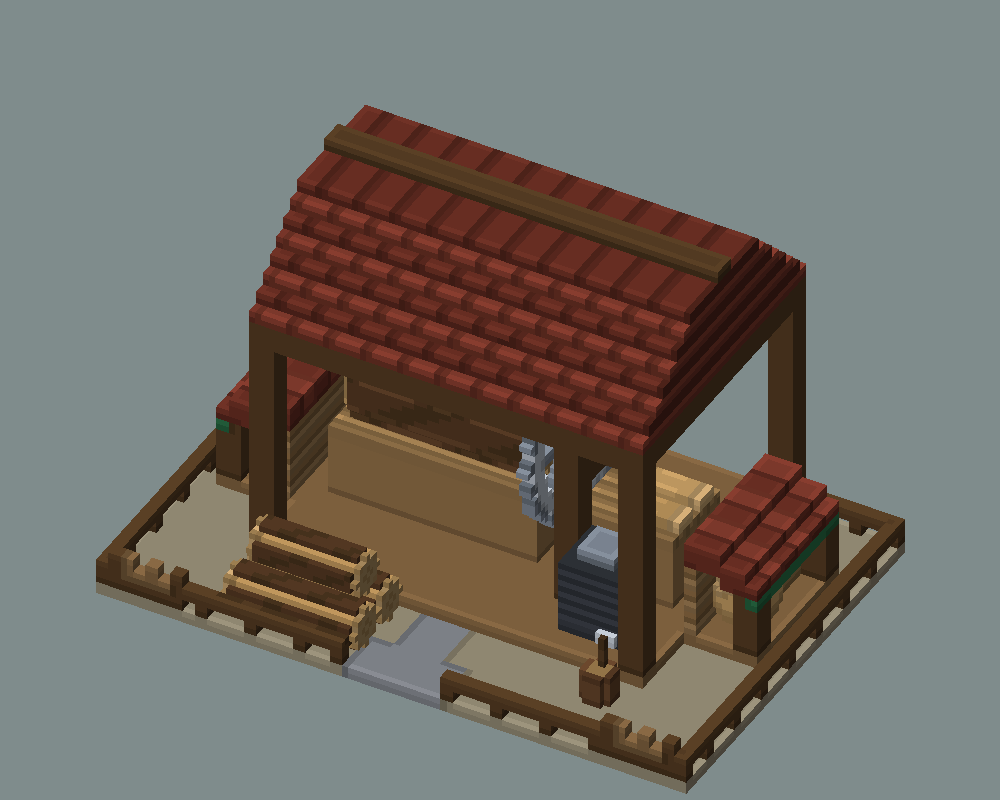
The storage on the buildings changed a lot the same day. A storage shed used to be a building of its own that you set against a producer, and on the factories the sheds stuck out past the footprint, so a neighbour built flush against a factory ran right into them. I first gave every factory a fenced yard on its side with two big sheds in it. They were too big, and I missed the little lean-tos from before. So the small lean-tos came back, standing against the building itself, and the building moved over inside its footprint to make room. Until a shed is built, its spot holds whatever fits the trade: offcuts and a sawdust sack at the sawmill, kegs and a sack of malt at the brewery.
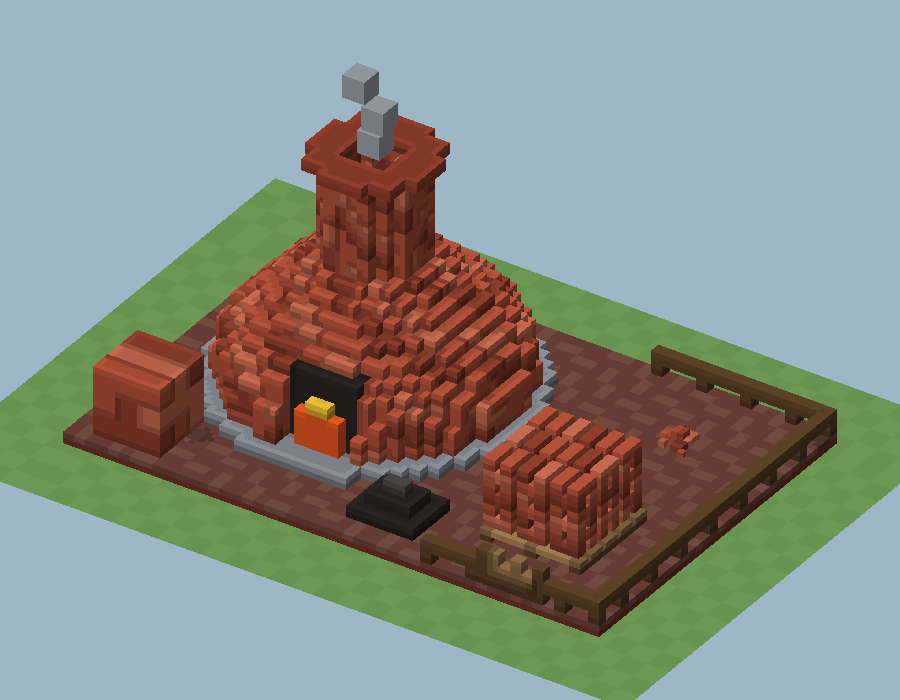
Not every building wants a roof for its goods. The kiln, the clay pit, the mine, the logging camp and the quarry now keep their stock out in the open on a paved yard. Where nothing is stored yet there is a little heap of rubble, and each upgrade clears one heap and puts a neat stack there instead: fired bricks at the kiln, pale clay bricks at the clay pit, crates of ore and coal at the mine, logs at the logging camp and cut stone at the quarry.
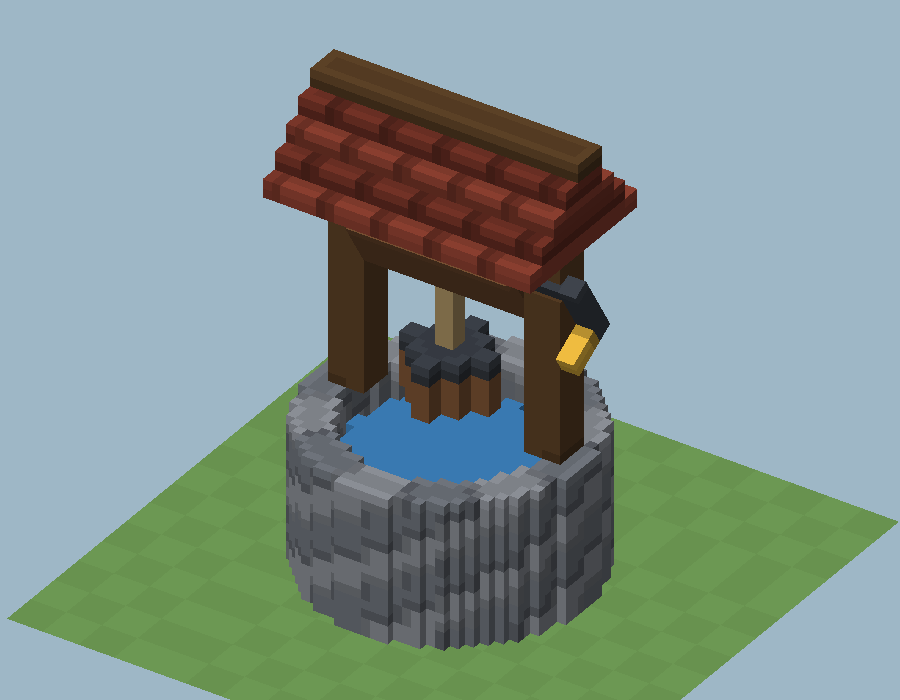
The well went the other way. It never needed more storage: when a town needs more water, it builds another well. So it lost its yard, its trough and its buckets and is now just the round well with its little roof, on a single tile, and people can draw from it on all four sides.